
Microalgae Photobioreactor
Industrial photosynthesis to convert CO₂ into high-value biomolecules
Decarbonize & produce high-value biomolecules with microalgae
A photobioreactor equipped with internal LED lighting to efficiently convert CO₂ into high‑value biomolecules (pigments, lipids, peptides), ensuring consistent quality and enabling continuous operation.
Designed to scale from pilot volumes to the cubic‑meter range and integrate seamlessly with extraction and purification steps.
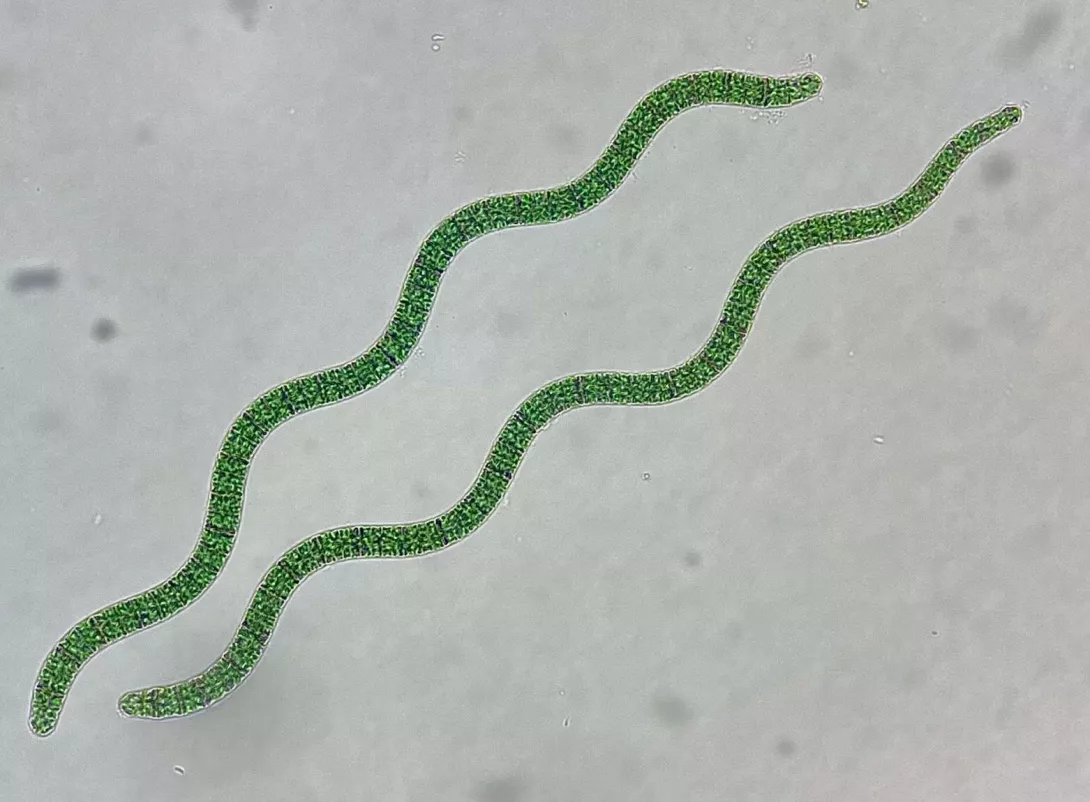
Why microalgae have become a strategic process
Microalgae transform CO₂ and light into biomass rich in pigments, lipids, proteins and other molecules of interest — a natural lever for producing ingredients while reducing carbon footprint.
In a closed photobioreactor, the cultivation environment remains stable: productivity, consistency and predictability increase, independently of weather or location.
Why internal lighting?
Unlike external lighting systems, internal illumination places light energy at the heart of the culture volume:
- better light distribution,
- optimized energy transfer,
- higher achievable concentrations,
- simplified implementation of continuous processes.
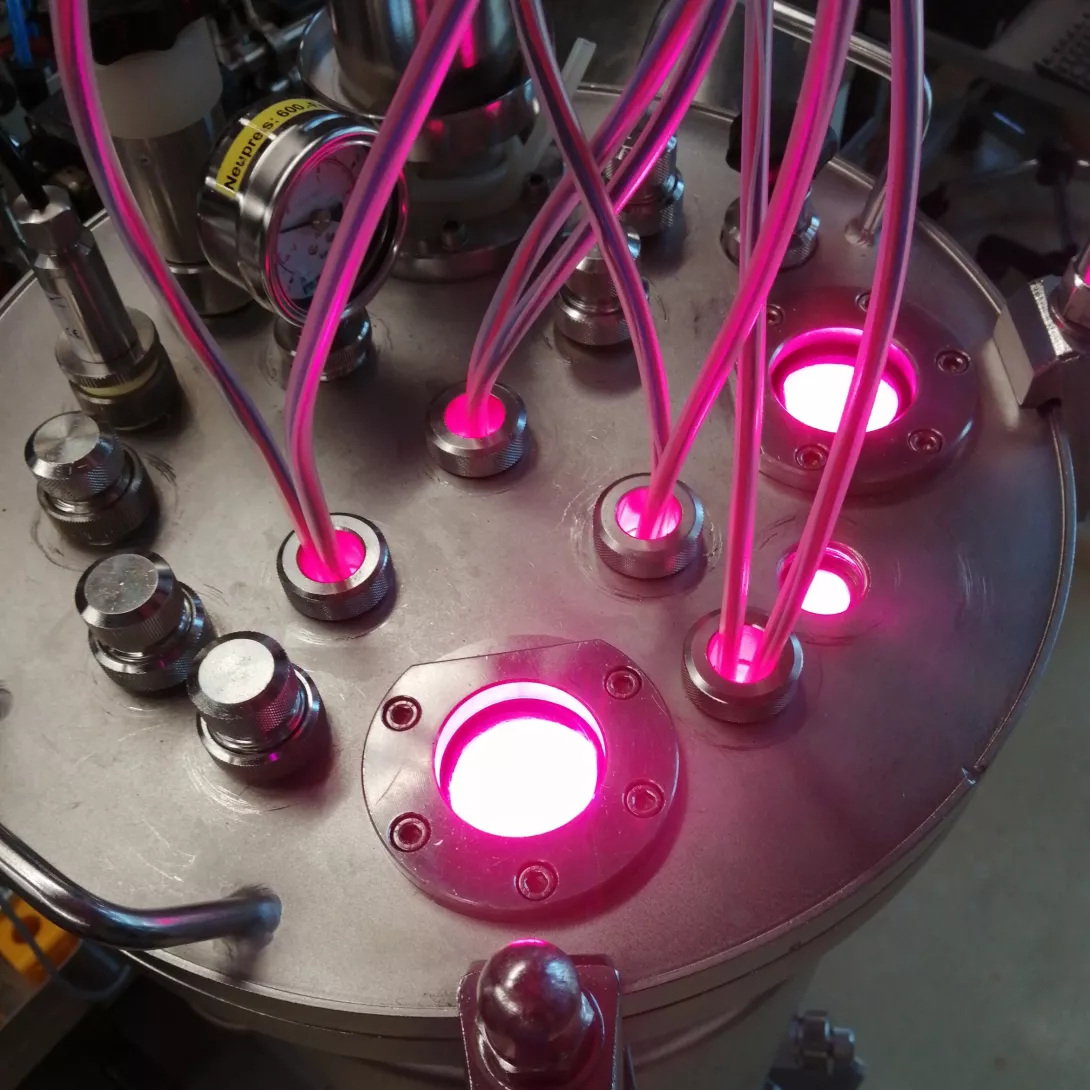
A process optimized through internal illumination
The reactor is engineered to maximize photosynthetic efficiency.
Its architecture combines internal LED modules with digital control to position light precisely where the culture needs it.
A CPU manages light intensity and cycles, flow circulation and CO₂ injection.
The system is compatible with chemical and thermal sterilization to ensure process hygiene.
This approach supports high biomass concentrations (more than tenfold depending on the strain) and continuous cultivation when required.
Our industrial consortium: from cultivation to purification
To industrialize bio‑based chemicals derived from microalgae, NeoCarbons, De Dietrich and France PBR have formed a dedicated partnership.

NeoCarbons
Patented internally illuminated photobioreactor technology, validated at TRL‑7 on ~60 L, with scale‑up underway toward 1,000 L.

De Dietrich
Expertise in process integration, extraction, purification equipment and downstream engineering to convert biomass into market‑ready ingredients.

France PBR
Specialist in photobioreactor design, manufacturing and software supervision, from R&D to industrial‑scale facilities.
Advantages
Thanks to its internal lighting architecture and fully controlled cultivation environment, the photobioreactor provides optimal conditions to accelerate growth, stabilize quality and streamline operations.
Productivity & reproducibility
Concentrations >10× (g/L) achieved on several strains, with consistent quality over time thanks to robust control systems and a closed environment.
Light efficiency
Internal illumination enhances light distribution and minimizes losses for improved photobiological yields.
Continuous hygiene
Sterile design, closed‑loop operation and CPU‑controlled cycles ensure process cleanliness.
Scale‑up & downstream integration
From a 60 L pilot to industrial scale, with integrated extraction and purification steps to deliver ingredients aligned with market needs.
Key Figures
85%
light efficency
1m³
at industrial scale
10x
concentration (g/l) on major strains
Dermocosmetics
Dermocosmetics
- Natural pigments (carotenoids)
- Antioxidants ( polyphenols, algal vitamins)
- Soothing and moisturizing algal extracts
Pharmaceutical & Nutraceutical
Nutraceutical
- Pigments (phycocyanin, astaxanthin)
- Nutritional lipids (DHA, EPA)
- Alternative proteins (algal proteins)
Pharmaceutical
- Functional peptides
- Specific polysaccharides
- Bioactive molecules
- Biochemical precursors of therapeutic interest
Decarbonation & Green Chemistry
Decarbonation
- Conversion of CO2 effluents into valuable biomass
- Production of low-carbon bio-based molecules
- Contribution to circular value chains (bioprocesses, biorefineries)
Green Chemistry
- Bio-ingredients
- Natural colorants
- Precursors for bio-based surfactants
- Technical lipids
Accelerate your transition toward bioproduction
Would you like to validate the technology on your own strains, test your CO₂ effluents or assess scale‑up potential?
We offer several collaboration formats:
- Request a trial
- Host a pilot
- Co-develop an ingredient