Purification of Vegetable Oils: Molecular Distillation Combines Quality and Compliance
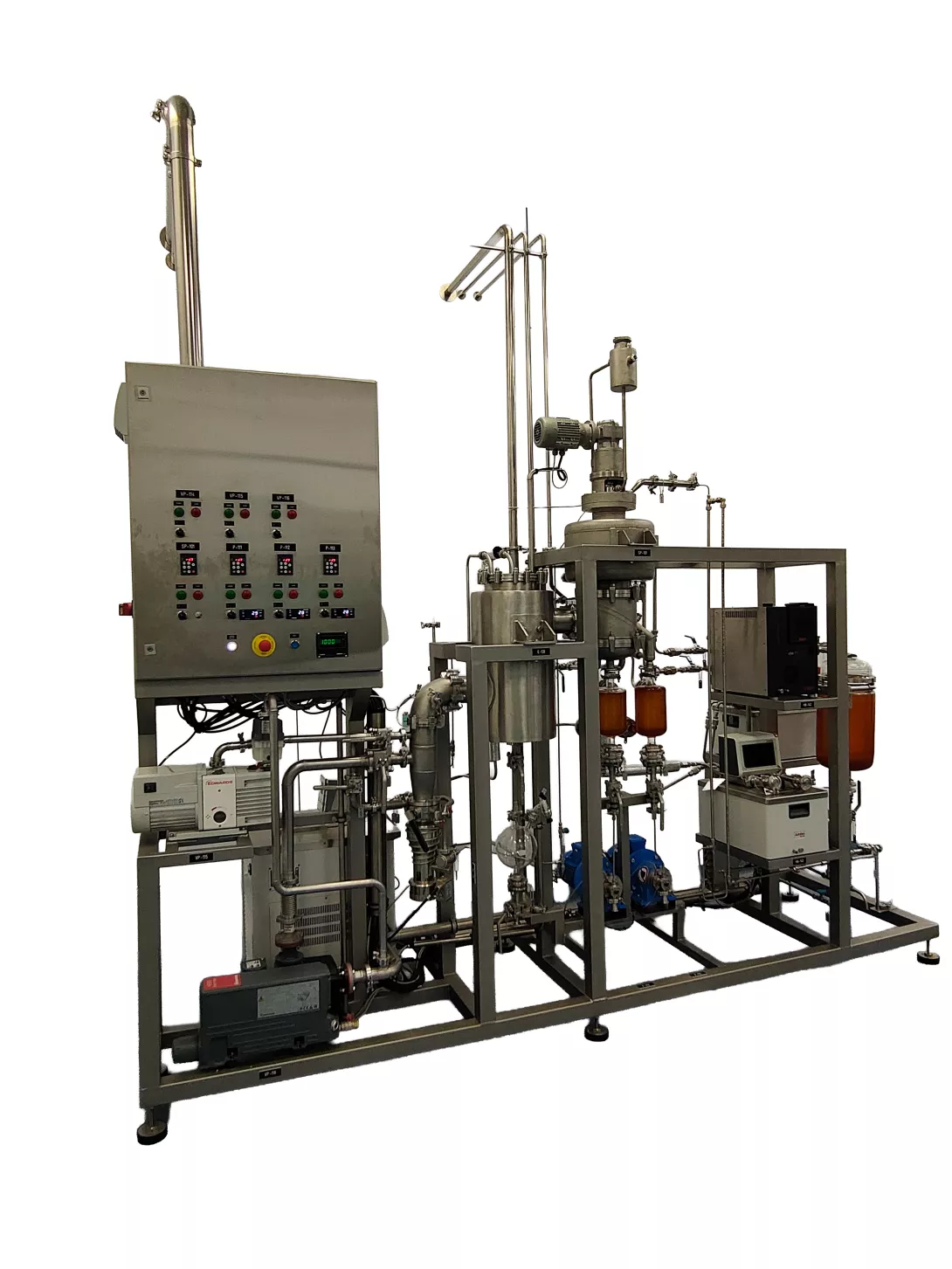
To comply with European standards, cosmetics manufacturers must remove contaminants present in trace amounts in vegetable oils without altering their quality or organoleptic properties. This requirement calls for reliable and fully reproducible solutions. Operating under high vacuum, down to 0.005 mbar, De Dietrich’s molecular distillation unit enables targeted evaporation. Integrated as a compact, automated, clean-in-place skid, it adapts to all production volumes and illustrates an industrial application combining technological precision with regulatory compliance.
Growing requirements and a compliance challenge
Rich in fatty acids, well tolerated by the skin and valued for their natural origin, vegetable oils play an essential role in cosmetic care products: facial care, haircare products, make-up and dermo-paediatric formulas. Although derived from natural sources, these oils may nevertheless contain traces of undesirable contaminants such as MOAH (Mineral Oil Aromatic Hydrocarbons), MOSH (Mineral Oil Saturated Hydrocarbons), phthalates or plasticisers, originating from transport, storage or extraction processes.
In response to European regulations, manufacturers must now secure their production processes without compromising the organoleptic properties or effectiveness of their products. This dual requirement calls for controlled purification processes capable of guaranteeing compliance for every batch while preserving product integrity.
Short-path distillation: efficient, compact and adaptable
To meet this challenge, De Dietrich engineers have designed a molecular distillation unit operating under high vacuum (0.005 mbar), specifically suited to the treatment of thermosensitive oils.
“The objective is clear: to selectively remove targeted compounds without exposing the oil to excessively long heat contact times,” explains Yves Le Coz, Process Solutions Manager at De Dietrich.
Thanks to extremely low pressure, distillation takes place at lower temperatures. Volatile contaminants are therefore separated efficiently, without altering the oils’ colour, odour or texture. The complete system is supplied as a compact, automated and clean-in-place skid, making it easy to integrate into an existing production environment. The solution can be adapted to all types of products and to several production capacities, from pilot scale through to industrial scale.
“Short-path distillation enables targeted, gentle treatment that is perfectly aligned with the requirements of the cosmetics industry,” concludes Yves Le Coz, Process Solutions Manager at De Dietrich.
Measurable results at every scale
During trials conducted on various vegetable oil profiles, the relevance of the solution was confirmed: more than 90% of the targeted contaminants were removed, without altering the organoleptic properties. The treatment, carried out at temperatures below 60°C, preserves the most sensitive components, including in the most delicate oils, while guaranteeing a high recovery rate regardless of the volume processed. The installation also makes it possible to treat a wide variety of products without changing the configuration, a major advantage for small production runs and multi-reference sites.
“In the cosmetics industry, even the slightest trace of an undesirable substance can compromise the compliance of the finished product. Molecular distillation makes it possible to act upstream, from the oil purification stage, to secure the entire formulation process,” emphasises Yves Le Coz, Process Solutions Manager at De Dietrich.
Close support for properly sized solutions
By combining vacuum expertise, respect for raw materials and tailor-made integration, short-path distillation provides a reliable response to the compliance requirements applicable to vegetable oils.
At De Dietrich, artisans of progress, this technology forms part of a comprehensive portfolio of solutions dedicated to the treatment of sensitive molecules. With its global presence and recognised expertise in solid-liquid separation, the group supports cosmetics manufacturers in deploying safe, sustainable, reproducible processes adapted to the operational constraints of production workshops.